← All case studies
Case Study

Developing a Project Culture: The ProjACT Approach at ASB Hessen

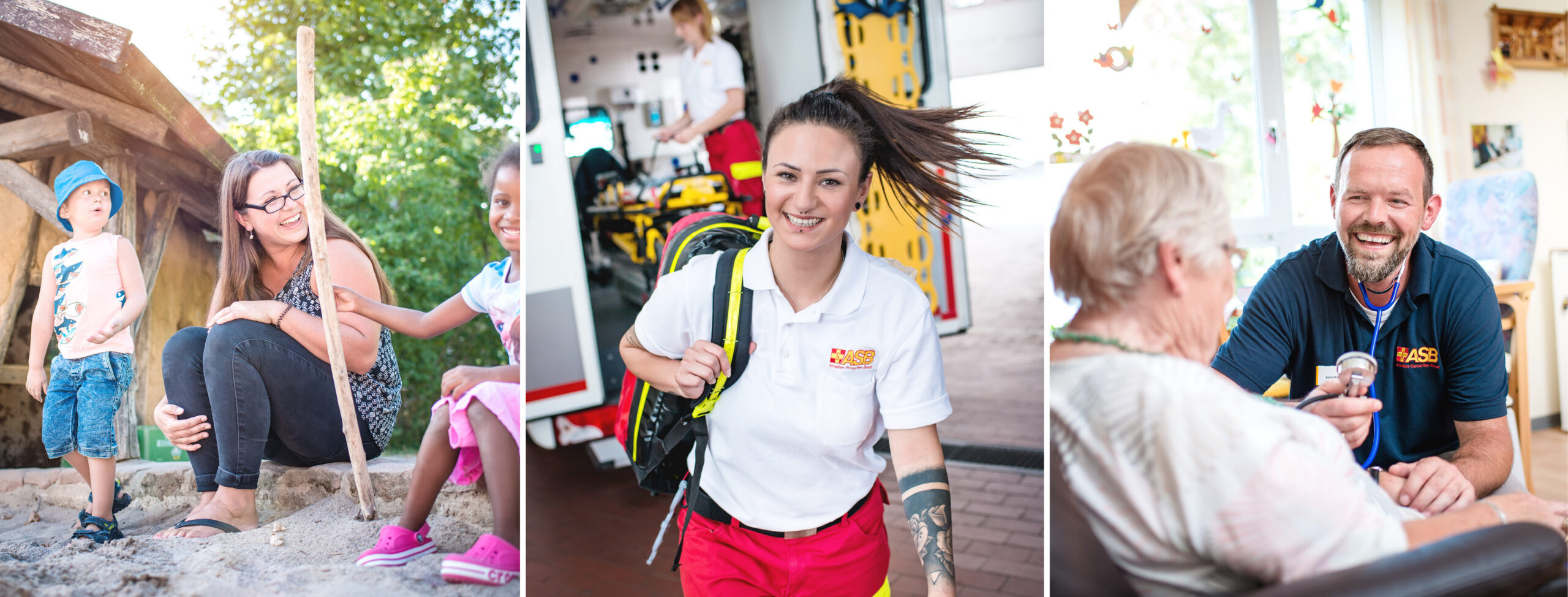
Arbeiter Samariter Bund Hessen (ASB Hessen) is one of the largest regional organizations within the ASB network in Germany. With several thousand employees and volunteers, the organization provides a wide range of social services. As a modern provider in the social sector, ASB Hessen faces the challenge of planning, steering, and delivering complex projects in a dynamic environment. This requires a clear project culture, a shared methodological foundation, and leadership that creates orientation across functional boundaries.

01

Context

Arbeiter Samariter Bund Hessen is one of the largest regional organizations in Germany’s welfare sector and is responsible for a wide range of social services, including emergency medical services, care, child and youth services, as well as a variety of educational and support programs. In this complex environment, the number of cross departmental projects has increased significantly in recent years. These included digital transformation initiatives, organizational development efforts, new service offerings, and projects involving multiple locations and specialist areas.

As a result, the demands on project work grew steadily. At the same time, the starting conditions were highly heterogeneous. Volunteers, employees, managers, and project staff brought different levels of experience, varying methodological approaches, and different expectations regarding roles and processes. At the same time, projects themselves became larger, more dynamic, and more interdisciplinary. Decisions often had to be coordinated across several organizational levels, and collaboration between steering committees, project managers, and project teams became increasingly complex.

In many cases, projects reached their limits due to a lack of clarity regarding project mandates, roles, governance, and collaboration. This highlighted the need for a shared and binding project culture as well as a consistent approach to project work across the organization.

Objectives

ASB Hessen therefore set out to create a shared foundation for project work across the organization. The goal was to establish a clear and consistent project culture, a common project model, and a shared understanding of how projects should be led and managed within the association.

02

A central objective was to involve all relevant levels of the organization from the steering committee to project team members and to build a consistent qualification framework that could be embedded sustainably over time.

Establish clear and binding standards

A clearly defined project model, shared role definitions, and transparent processes were intended to ensure that projects across the organization would be initiated, managed, and completed according to the same principles. Both traditional and agile methods were to be considered so that each project could draw on the most appropriate set of tools.

Strengthen leadership in projects

Steering committees and project leaders were to be enabled to fully assume their leadership roles by providing orientation, making clear decisions, and ensuring consistent governance even in situations where project leadership had no formal disciplinary authority.

Make knowledge available on demand

Content and methods should not remain confined to training settings but remain continuously accessible. To support this, the program incorporated practical learning tools such as QuickCards, digital mind triggers, and other formats designed to support the transfer of learning into everyday project work.

Establish a practical toolbox for project work

The organization needed practical tools that project teams could apply immediately. These included instruments for clarifying project mandates, structuring kick offs, organizing meeting cascades, defining delegation logic, conducting retrospectives, and structuring project closure.

03

The ProjACT Approach

To achieve the objectives set by ASB Hessen, we developed a comprehensive qualification approach together with a representative development team from across the organization. The program was designed as a top down learning architecture aligned with the ASB project model and connecting all relevant roles, from steering committees to project team members, within a shared learning framework. During this process, the name ProjACT also emerged. It originated within the participant group itself and emphasizes the idea of ACT as the defining standard for effective project work.

Starting point: qualifying the steering committee

The initiative deliberately began at the top of the organization. A focused leadership training program strengthened the shared understanding of the five roles of the steering committee, emphasizing active governance rather than passive reporting and the importance of issuing clear and binding project mandates. This created the leadership orientation required for all subsequent formats.

Modular training program for project leaders

A three stage development program for project leaders created a structured learning path aligned with the project model. Module 1 Leading projects Leadership in the middle of the organization, role clarity, team dynamics, and conflict resolution. Module 2 Structuring projects Project mandates, project organization, kick off design, and meeting cascades. Module 3 Managing projects Delegation, effectiveness, economic thinking, and project closure.

Mindtriggers and reflection dialogues

Two additional transfer mechanisms were used between modules. Online mindtriggers supported continuous activation and practical application of the content. Reflection dialogues allowed project leaders to systematically reflect on their own projects, using real examples from their work and receiving individual feedback.

Short practical impulses for project team members

To strengthen project culture at the operational level, project team members received short and clearly structured learning impulses focusing on role clarity, mandate clarification, and meeting behavior. These formats served as a practical entry point and were complemented by digital learning modules.

A consistent toolbox for project work

All formats were supported by a shared and immediately applicable set of tools. These included frameworks for project mandates, role models, delegation logic, kick off structures, meeting cascades, retrospectives, project closure formats, and other practical instruments.

04

What changed

Leadership level

01

At the leadership level, a shared understanding emerged of how projects should be governed and led across the organization. Within steering committees and departmental leadership teams, roles became clearer, decision paths more explicit, and project mandates more structured. This created the foundation for formulating project assignments more precisely, shortening decision cycles, and establishing more consistent governance of projects across the organization.

Project leadership level

02

At the level of project leadership, the program led to a noticeable increase in competence and confidence. Project leaders developed greater clarity in their leadership role, particularly when leading without formal disciplinary authority and navigating the demands between line management, steering committees, and project teams. Projects were set up in a more structured way, kick offs became clearer and more focused, and conflicts were addressed earlier in the process.

Project team members and teams

03

For project team members and teams, the initiative created significantly greater clarity and orientation. Roles, expectations, and responsibilities became better understood, and the clarification of project mandates was more actively addressed. Teams worked more independently, meeting time was reduced, and collaboration across departments became easier because participants were operating with the same project logic. This reduced friction and improved the quality of operational project work. The Management Systems department of ASB Hessen continues to support the ongoing development of ASB ProjACT through continuous learning opportunities. Reliable booking channels and targeted information are provided via a dedicated landing page. In addition, a project management software platform has been introduced across the organization, and project actors are now connected through the ASB ProjACT forum.

Organization and the wider association

04

At the organizational level, the initiative established a more consistent and reliable project culture. Projects could be initiated more quickly, managed more steadily, and completed more effectively. Cross departmental collaboration became easier, decision processes clearer, and major transformation initiatives such as digitalization and structural change projects could be managed more effectively. Through projects conducted according to the ProjACT principles, ASB Hessen strengthened its implementation capability, speed, and overall organizational professionalism.

Our collaboration with GOBRAN® has been driven by a genuine commitment to understanding how project work actually creates impact within our organization. Together, we analyze where progress is most needed and focus our efforts precisely there and at the right pace. The work is conducted on equal footing and involves all relevant project stakeholders.

At the same time, the process is carried out with a sense of practicality and lightness that makes it possible to further develop the organization alongside day to day operations and to use the approach as a tool for leadership development. The result has been a noticeable increase in competence and ownership within a demanding environment. Project work is now more clearly aligned and coordinated across the organization. Most importantly, the impact extends well beyond individual projects and contributes to how the organization works as a whole.

Sascha Morsch, Head of Management Systems, ASB Hessen
Personal contact

From the starting point to the right impact architecture.

Together, we identify which leadership impact offers the most meaningful starting point and which form of support fits the organization.

Preparing security check …
Information about how we process your details is available in our Privacy Policy.
Leader with a notebook on a rooftop terraceHands writing in a notebook